SL Commuter Ferries: Stockholm Routes and Fleet
Stockholm’s commuter ferries use the city’s waterways as public-transport corridors. The SL pendelbåtar connect central quays with Djurgården, Nacka, Lidingö, Värmdö and Ekerö, providing useful everyday journeys while also offering wide views of the harbour and surrounding districts.
Official SL commuter-ferry page ↗Commuter Ferries as Part of Stockholm’s Transport Network
Stockholm is built around islands, channels and lakes. In many districts, a direct journey across the water is shorter than a journey around the shore by road. Commuter ferries turn this geography into an advantage by using the harbour as a transport corridor rather than treating it as a barrier.
The service combines practical commuting with a distinctive travel experience. A passenger may use the ferry to reach work, connect with the metro or bus network, visit Djurgården, travel to a waterside residential district or continue toward Värmdö or Ekerö.
The SL Commuter-Ferry Lines
The route descriptions below are deliberately general because terminal patterns and seasonal calls can change. The current SL journey planner should always be used for the exact stop sequence and departure time.
Nybroplan–Nacka–Lidingö–Ropsten area
Line 80 is the broad urban and inner-archipelago commuter-ferry corridor. It links central Stockholm with waterside districts in Nacka and Lidingö and provides an alternative to road and rail travel along the harbour.
- Nybroplan and central Stockholm waterfront
- Djurgården and eastern inner-city stops
- Saltsjöqvarn, Finnboda and Kvarnholmen
- Nacka Strand and selected Lidingö-area calls
- Ropsten and other termini according to the current timetable
Djurgårdsfärjan: Slussen–Skeppsholmen–Allmänna gränd
Line 82 is the best-known central-city ferry. It connects Slussen with Skeppsholmen and Djurgården and is used by commuters, museum visitors and tourists throughout the year.
- Slussen
- Skeppsholmen
- Allmänna gränd on Djurgården
Stockholm–Värmdö commuter-ferry corridor
Line 84 extends commuter-boat travel eastward toward Värmdö. It connects waterside communities with central Stockholm while serving selected intermediate stops.
- Central Stockholm departure points
- Selected Nacka and inner-archipelago stops
- Värmdö-area terminals according to the current timetable
Klara Mälarstrand–Tappström
Line 89 links central Stockholm with Ekerö through Lake Mälaren. It offers a direct waterborne commuter connection and avoids part of the road journey around the lake.
- Klara Mälarstrand
- Selected intermediate Mälaren stops
- Tappström on Ekerö
Line 80: The Main Harbour Commuter-Ferry Corridor
Line 80 is the most extensive urban commuter-ferry service in the Stockholm harbour area. It links central waterfront terminals with rapidly developed former industrial districts in Nacka and with selected Lidingö and Ropsten-area calls.
The route is particularly useful because many stops are located directly beside dense residential and commercial areas. A ferry can provide a relatively direct journey between opposite sides of the harbour while avoiding congested roads and indirect land connections.
The calling pattern may vary by departure. Some vessels continue farther than others, and selected stops may be served only at particular times.
Line 82: Djurgårdsfärjan
Djurgårdsfärjan is one of Stockholm’s most familiar public-transport services. It crosses the inner harbour between Slussen and Djurgården, with Skeppsholmen included in the route pattern.
The ferry is used by residents and commuters, but demand is strongly influenced by museums, attractions, events and seasonal visitor traffic on Djurgården.
Frequent terminal work places particular demands on vessel layout. Wide passenger circulation areas, rapid boarding and strong low-speed manoeuvrability are more important than high open-water speed.
Line 84: Stockholm and Värmdö by Water
Line 84 expands commuter-ferry travel eastward toward Värmdö. It serves a different role from the short central-city crossing because journeys are longer and the route begins to enter the inner archipelago.
The service can be attractive to passengers whose homes or destinations are close to the shoreline but relatively distant from fast road-based public transport. The precise terminal and intermediate stop pattern must be checked in the current timetable.
Line 89: Klara Mälarstrand to Tappström
Line 89 operates on Lake Mälaren rather than the eastern harbour and archipelago waters. It provides a commuter connection between central Stockholm and Ekerö, using a direct water route toward Tappström.
The line demonstrates how passenger shipping can complement buses and roads in western Stockholm.
The SL Commuter-Ferry Fleet
Commuter-ferry vessels need to balance capacity, speed, low-speed manoeuvrability and rapid passenger exchange. The routes vary from very short central crossings to longer journeys through exposed harbour waters, so one design is not ideal for every line.
Some vessels are closely associated with a particular service, while others can be moved between routes or operated by contracted companies. Fleet assignments can therefore change.
Passenger-focused design
Large windows and open decks are valuable in Stockholm because the journey itself offers extensive city and harbour views. At the same time, the vessel must provide sheltered seating for winter operation.
Fast terminal turnaround
Urban commuter services depend on short calls. Doors, gangways and interior circulation must allow passengers to enter and leave efficiently without compromising safety.
SL Commuter-Ferry Vessels
Available local photographs link to searchable vessel records.
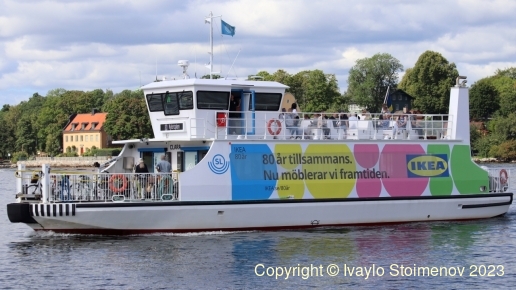
Clara
Passenger craft associated with Stockholm waterborne transport.
View vessel record →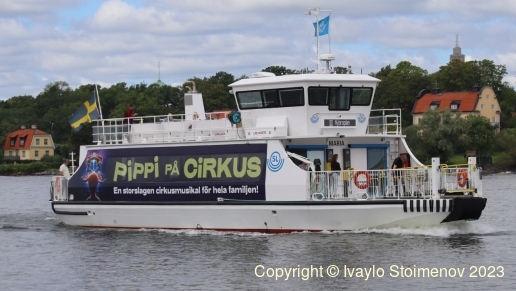
Maria
Modern passenger craft associated in Stockholm waterborne transport.
View vessel record →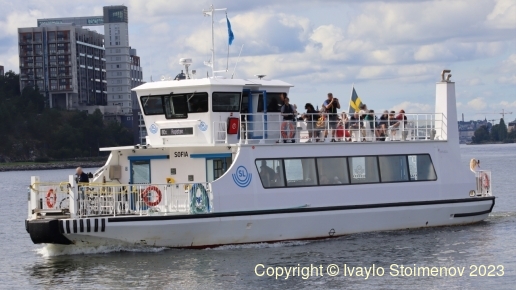
Sofia
Passenger craft associated with Stockholm waterborne transport.
View vessel record →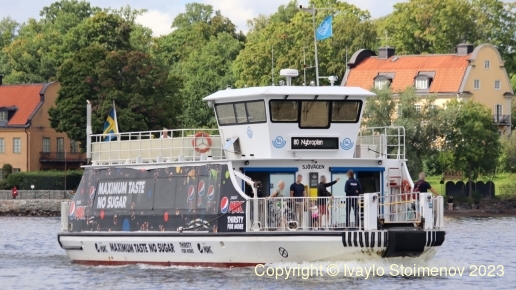
Sjövägen
Modern passenger vessel in Stockholm commuter-ferry traffic and urban waterside links.
View vessel record →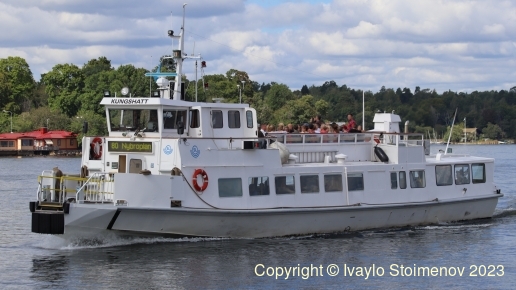
Kungshatt
Passenger vessel in Stockholm commuter-ferry traffic and urban waterside links.
View vessel record →Nova
Newer electric passenger vessel associated with lower-emission water transport.
Official SL commuter-ferry information ↗How the Commuter-Ferry Service Operates
The network must function in crowded summer conditions and during dark, cold winter commuting periods. Water level, wind, ice, visibility and traffic in the harbour can affect operations differently from land-based public transport.
The ferries also share the water with sightseeing boats, archipelago ships, workboats, private craft and larger commercial vessels. Crews must maintain safe navigation while keeping to a public timetable and making frequent calls.
Urban terminals
Central stops need fast boarding, clear passenger flow and good connections with walking, metro, tram and bus routes.
Outer stops
Longer routes may require greater speed, more sheltered accommodation and stronger performance in open water.
Electric Propulsion and the Future of Urban Ferry Travel
Commuter ferries are well suited to electrification because they operate predictable routes and return frequently to terminals where charging can be installed. Electric motors reduce local exhaust emissions and noise.
Battery capacity, charging time, winter heating and operational reserve must nevertheless be considered carefully. A vessel must complete its schedule in strong wind, cold temperatures and unexpected disruption.
Stockholm’s continuing development around the waterfront may create new opportunities for commuter ferries. Their success depends on direct routes, useful terminal locations and reliable timetables.
Official SL Links
Official overview of the SL pendelbåtar and current travel guidance.
Open official ferry page ↗Search a specific date, line, stop and departure through SL.
Open SL journey planning ↗SL directs passengers to the app for journey searches and publishes customer-service information on its website.
Visit SL ↗